This Month's Photo of Chunlin
I'm only a week late. That's not too bad, is it?
For the world's enjoyment, here's February's photo from my personal calendar of Chunlin, from a year ago when we were in Victoria: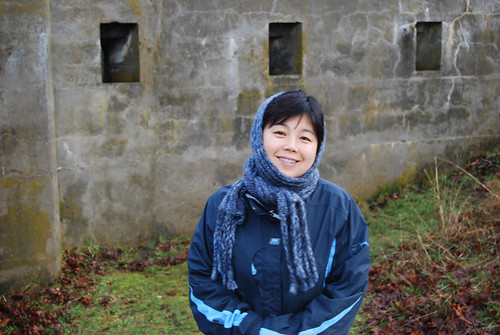
Ain't she a cutie?
I'm only a week late. That's not too bad, is it?
For the world's enjoyment, here's February's photo from my personal calendar of Chunlin, from a year ago when we were in Victoria:
Ain't she a cutie?
WA is for Western Australia.
Wa. and Wash. are for Washington.
Don't believe the federal government. What do they know?
Only use WA for Washington when mailing a letter via the United States Postal Service, because that's their rule.
Also, USPS made up ZIP codes for their own convenience, so why should we use them any other time?
Today is, of course, the anniversary of the day when King Furoíso I began the unification of the kingdom of Naraka.
Hip hip hurray! Hip hip hurray! Hip hip hurray!
As such, I will now present to you a few excerpts from Furoíso's memoir/diary.
But first, the Narakan flag:
3/47/14::3/1/2
The year was 3/46/3 . . . or 1, depending on how you want to count it. For everyone at the time, it was the former. Years later, we would call it the latter, but not at the time, no. You see, I did not know that I would revitalize the Narakan nation; I did not know that I would become king.
I had left home to find the world aboard a trade ship. The captain did not tell me how long the voyage would be, and I did not care anyway. I was twenty-two.
The captain also failed to mention how often I would be paid. Unfortunately (for him), it turned out to be never. That is why I mutinied, revolted, and left. Headed for home on foot.
I knew that Rízhoso‘ono was somewhere to the southeast because I had stolen the navigator’s world map. I was at that inlet there, home was that dot there. Only a few inches! Should not take long, right? Gods, I was an idiot!
I will skip the mutiny bit for now and start with the journey.
We were hiding out in the tiny port town of Sírépaga, but not doing a very good job of it since there were only three taverns in town and we were in the closest one to the docks. But they did not find us. Go figure.
It was in that tavern that I first noticed I could understand the natives. All up and down the coasts, I became accustomed to ignoring the babble of the locals, but here in Sírépaga, they spoke Narakan! Well, almost. Enough so that I asked about it. After receiving a few growls, one old geezer deigned to answer.
“Them folk north and south speak odd, but over the pass, they speak the words normal-like.”
And what did he call the language?
“I never bothered to give it a name. Why should it have one? The words are the words.”
He seemed unimpressed by “Narakan,” but that is okay because I am sure he is dead now.
I convinced Zho and Vaví that we should head east, over the mountains. They readily agreed because, first, we were on the run, and second, I was the leader. So east we went, around the south end of Mafínopono Lake and into the hills.
Thinking back, we might as well have stolen a few horses, but we did all right on foot. The Road was made for foot traffic then. (I really should not call it “The Road,” but it was at least “the road” back then.) There were inns placed about every ten miles. We stopped at the first of these we came to and promptly started complaining.
“Oh, my feet!”
“I cannot walk another step!”
“Whose idea was this, anyway? Furo?!”
“Shut up. I hurt as much as you, but it was either this or be hung by our necks. Which would you prefer?”
“I would give my life to be dead. . .”
You would think that life aboard ship would keep us in shape. But I suppose climbing up and down ropes and swabbing decks use different muscles or something. In any case, we were sore and tired, and it was still early afternoon.
3/47/14::3/1/3
It was in the hamlet of Hurovo that I first met my wife- and queen-to-be, Rosí. I do not think she believed me when I said I would return, but I did and we got married the next year. You probably should not believe the tales about me walking across the continent for love. She was on my mind, true, but I had plenty of other reasons, as well. I was working to improve travel conditions, I was creating a trading corridor, I was uniting the Narakan nation!
Love? Yes, there was love. The first time I saw her, it was all I could do to keep from staring like a slack-jawed yokel. She was definitely the most beautiful woman I had ever seen. When I later learned that she was unmarried, I had a plan. A goal. What a smile! And those eyes. . . those eyes. . . She did not notice me at first, of course. I was but another traveler amongst many. But I stayed in Hurovo until she did know me, and fall in love with me, and agree to marry me.
For some reason, Zho and Vaví stayed with me then. Perhaps they were entertained by seeing their friend stricken so with love. Perhaps they felt Hurovo was as good of a town as any to settle down in. But if so, why did they follow me all the way on to Rízhoso‘ono? For friends, I really did not know them well.
But Rosí and I, we knew each other’s innermost thoughts and secrets after only two weeks. From a nod of recognition to such intimacy in eight days. . . I sit here now, disbelieving my old-man memories. I should have written this down back then. I would have; I planned to, but I was always so busy! Kingdoms do not start themselves, I will have you know!
3/47/14::3/2/2
Our second day we did better—a full twenty miles. We were not really in poor shape and it is not as if we had heavy loads to carry. In fact, all that we were carrying was the gold and silver we had swiped from the captain. “Back wages” we told ourselves. I worried whether or not the money would last until home. I need not have worried, though. Apparently, trade ships deal with an entirely different level of monetary sums than rural inns. I probably could have started my kingdom right then and there with the money in my purse, if I had known how.
But we had a plan, and we were sticking to it. Eastwards we went, mostly uphill that day, through farmlands and forests. Occasionally having to stop and ask directions at a fork in the road, asking for “the pass” and receiving helpful information.
We had lunch after ten miles, near Zanérífí Lake in the village of Rísorokama. I was there last year; it is still a nice place. Green hills surrounding you, piling taller and taller, hiding behind each other and jumping out at a curve in the creek. The winters in this region can get gray and dreary, but the summers are wonderful. Blue sky all around, blue lakes and clear streams to swim in, birds singing the day along. Everything is green, bright and varied greens. . . Occasionally winter days can be like that here, too—only colder. It is not like Karasalétu where everything dies in the winter and turns brown. Luckily it was not a typical gray winter day when we arrived, or else I probably would not have gotten off the ship! Instead, it was late winter pretending to be early spring and the sun was out and the world was a beautiful place.
. . . I really should not have decided to winter in Sírépaga this year. This has been a very gray winter. I should be down in Rízhoso‘ono where it is summer already! But here I am, rambling about the climate like an old fool. Ah, well. At least I will get some writing written while the weather’s wet.
That was one of my explanations of the flag, you know. Blue and green summer over gray winter. Of course now people say it is blue for Mafínopono, green for Karasalétu, and gray for Tékasara, but they do not seem to know why the duchies have those specific colors. Oh, sure, Mafínopono has water, Karasalétu has trees, and Tékasara has cities, but they all have all of them! To tell the truth, I designed the national colors while sitting beside a creek in Ríkoro County (it was not called that yet). I saw the rocks in the streambed, the trees and bushes along the creek, and the perfect blue sky. Epiphany! I had our flag!
My mother sewed the first Narakan flag. I did not tell her why I wanted it, but she made it anyway, bless her soul. The colors were darker than I had envisioned them, but you do not insult your mother—especially after she does you a favor. That flag is probably still floating around this palace somewhere, not doubt. We do not seem to throw anything away. . . . At least I think we left it up here in Sírépaga. I could be wrong. I often am, these days. I will ask Rosí about it tomorrow.
3/47/14::3/2/3
Well, I asked Rosí about the flag, and she said, “Do not you remember? My father burnt it!” And so he did. Threw it right in the fireplace the first time he saw it. If I remember correctly (and obviously I do not), Rosí’s father was one of the local leaders and did not want me upsetting the power structure. He would rather have his little chiefdom than be royalty!
Ha! He also forbade me to see his daughter! A lot of good that did him. It just convinced Rosí to run away with me. We went to Sírépaga, but we could have stopped much sooner. His power did not even reach to the next town. It does not matter in any case, because he is dead now.
Everyone is dead nowadays. Zho, Vaví, Koríso, everyone. Just me and Rosí, here in obscurity, whiling away our final years. I did not want to die when I was young, but I certainly did not want to end up like this! An old king with no kingdom and only half a brain left! Oh, the memories are still in there, but I need Rosí to get them out. Without her, . . .
Why did I give up my kingdom?! Because I felt old. What did I know then? Eleven more years of my body falling apart, failing on me. Now I am old. And my son forgets me. My dear sweet Furo, trying to ignore his feeble father, waiting for me to die. Soon, now doubt, it will be soon.
In Washington, there are several highways "on the books" that have yet to be built. Most of these will not be constructed before I get to their numbers because the Department of Transportation has no plans to build them.
SR 35: Created in 1995 and meant to be a short connecter across the Columbia River near White Salmon, Highway 35 would align with Oregon Route 35. A study was completed, but the bridge was never built. WSDOT does not list it among their projects.
SR 109: The northern third, from Taholah to Queets, has yet to be built. I believe this is because of jurisdictional issues with the Quinault Tribe. It's been listed since 1970, when the state renumbered its highways. WSDOT does not list its completion among their projects.
SR 168: This route has been talked about for ages, since before 1970. It's a highway over Naches Pass, bascially an all-weather shortcut for SR 410. Not only does Chinook Pass close in the winter, Highway 410 goes through Mount Rainier National Park, which doesn't allow commercial trucks. Despite the traffic that this road would alleviate from I-90, WSDOT does not list it among their projects.
SR 171: The Moses Lake portion of this highway exists (as city streets), but the much longer portion heading to Odessa has not been built, even though it's been listed since the restructuring of 1970. WSDOT does not list its completion among their projects.
SR 213: This route was defined in 1973, but has yet to be built. It would be a connection from SR 20 southward to US 97, south of Okanogan. Currently, there are county roads in that area that do the job. WSDOT does not list it among their projects. [UPDATE: The bridge across the Okanogan River connecting US 97 to Malott is now maintained by WSDOT and officially SR 213, even though it is unsigned as such.]
SR 230: This would be a wonderful new highway heading due east from I-90 at Ritzville. It would be a quicker, safer way to get to Pullman and WSU from Seattle than the current popular route of SR 26. Even though it's been legislated since 1970, WSDOT does not list it among their projects.
SR 276: Created in 1973 to be a bypass around the northern side of Pullman and WSU, this road has not been built, even though WSDOT bought the necessary rights-of-way for the route. Perhaps WSDOT has an institutional grudge against WSU. In Feburary 2007, WSDOT completed a routing development plan with the community's input, which doesn't quite make sense to me since they already have the land for the route. WSDOT does not list any plans to actually build the highway.
SR 339: This route was legislated in 1994 and still exists, sort of. It's the passenger-only ferry from Seattle to Vashon. King County now pays the state to operate the route, which makes it the equivalent of a county road that the county pays the state to maintain. Presumably the legislature will remove this route from their books, but that bill hasn't been introduced yet this term.
SR 501: The south and north ends of this highway have been constructed, in Vancouver and Ridgefield, but four miles along the Columbia River have yet to be built. WSDOT actually built part of the connecting highway already, but it doesn't go as far as the old highway, so the old highway still is the official route, and it gets shorter every time the river washes a section of it away. The route has been on the books since 1970 at least. Nowadays, however, Google Maps shows Highway 501 relocated to some county roads closer to I-5, but nothing from WSDOT or the legislature shows this change. WSDOT does not list any plans to complete this highway.
SR 704: This is the famed cross-base highway, legislated in 2002. WSDOT is finally beginning construction on it, but they haven't made it very far yet. As of today, they've made some improvements to a half-mile existing street, but won't finish that short stretch till this summer. Since only 13.5% of the full project has been funded, I wonder if it ever will be finished. With that amount of money, they might be able to make it another half mile. [UPDATE: The eastern 1/2 mile of this route ("Phase 1") is now open for traffic and signed as SR 704, even though it's just a widening of an existing road.]
When the producers of Eagle Eye and Get Smart realized they had the same plot device at the end of their movies, who do you think got more upset?
Does anyone really think that a bomb tied to a certain musical note is a high-probability method of timing? What if someone happens across the note beforehand? What if the musicians flub the song?
What if someone comes along and stops the musicians from performing? ... Oh wait. That's what happened in both movies.
My calendar from WNPS via Granddad says that today is National Seed Swap Day, so get out there and swap some seeds!
Preferably Australian seeds, for today is also Australia Day!
And how about some Australian ox seeds? Today's the Lunar New Year, of course, and the beginning of the Year of the Ox. Happy New Year!
Yesterday, we watched parts of China's five-hour New Year's variety show. The dancing and acrobatics are fun to watch, but I still don't get the comedy.
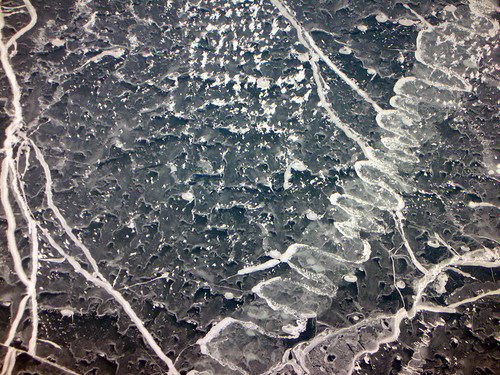
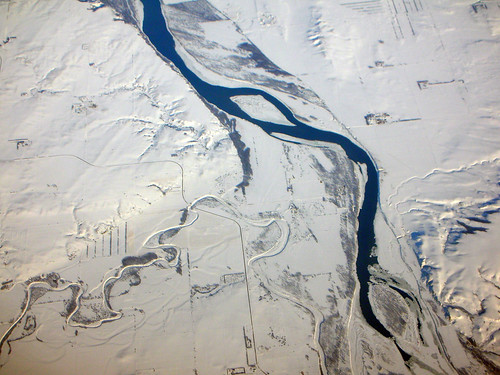
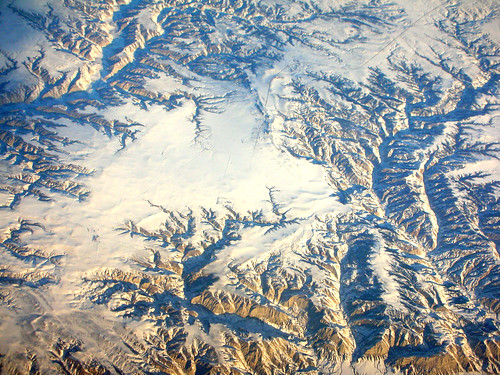
One of these is Montana, one is North Dakota, and one is Ohio. Can you tell which is which?
More more aerial photos from last week's trip on flickr.
Today's my first time in the grand state of Ohio. Hooray.
There's a foot of old snow on the ground, but nobody seems to notice.
It's a good thing Seattle had that cold spell last month. It prepared me well for these sub-freezing temperatures, or I'd otherwise need to put on my hat and gloves instead of just carrying them around in my pockets.
I'll be back tomorrow. Yay!
Good luck, President Obama. May you exceed my expectations and fall well short of the expectations of those who voted for you.
And now a song:
The change, it had to come"Won't Get Fooled Again," The Who
We knew it all along
We were liberated from the fold, that's all
And the world looks just the same
And history ain't changed
'Cause the banners, they were all flown in the last war
I'll tip my hat to the new constitution
Take a bow for the new revolution
Smile and grin at the change all around
Pick up my guitar and play
Just like yesterday
Then I'll get on my knees and pray
We don't get fooled again
There's nothing in the streets
Looks any different to me
And the slogans are replaced, by-the-bye
And the parting on the left
Is now parting on the right
And the beards have all grown longer overnight
I'll tip my hat to the new constitution
Take a bow for the new revolution
Smile and grin at the change all around
Pick up my guitar and play
Just like yesterday
Then I'll get on my knees and pray
We don't get fooled again
Don't get fooled again
Meet the new boss
Same as the old boss
I remember when the big sign on Highway 18 said "Kent" and they added a little sign just beyond that said "Covington."
Now the big sign says "Covington" and the little sign says "Kent."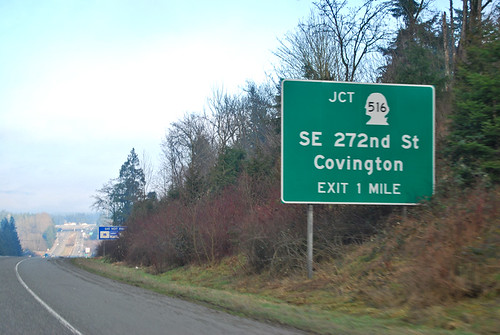
When did that happen?
. . . Probably about the same time that Costco and the roundabouts were added, or maybe back when the Fred Meyer was built, or more likely when they widened 18 from two lanes to four. But definitely after Covington became an incorporated city, right?

All hail Vítí, Goddess of Ice, for today is Her holy day! Spring is just around the corner (really!), so let's celebrate!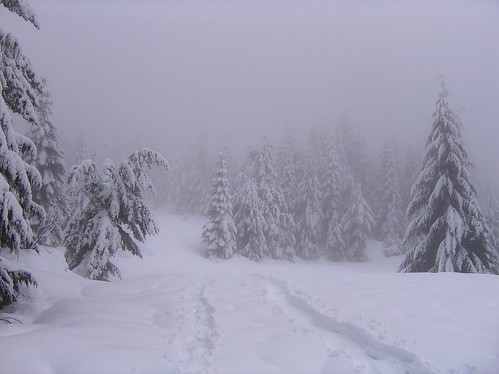
Long ago, Kara, Goddess of Soil, met Hérazha, Goddess of the Wind, for the first time and had a sudden vision. Kara prophesized that the children of Hérazha, Who at that time was childless and unmarried, would grow to be stronger and more powerful than Their father. Hérazha was shocked at this pronouncement, but soon learned to live with it. She bore Nokí, Goddess of Food, Who did indeed grow stronger than Her father, Voro, God of Hearth Fire.
Hérazha is quite beautiful, so Sozho, High God of Air, being Who He is, eventually could not control His urges. Sozho forced Himself upon Her, satisfying His lust. Only afterwards did He remember Kara’s prophecy. Out of concern for His rule of the universe and place as King of the Gods, Sozho promptly swallowed Hérazha whole.
Inside Sozho, Hérazha bore Her child, Vítí. She nursed the child goddess and taught Her well. Vítí grew strong and wise. Soon, Sozho heard strange metallic clanking sounds emanating from within His body. The noise began to drive Him insane.
The other gods soon were able to hear the sound, as well. Nazhoro, God of Coldness and son of Sozho by Nuvíní, High Goddess of Earth, realized what the sound probably was. Nazhoro convinced Sozho He could stop the racket, then took up His massive axe and split open Sozho’s head.
Out popped Vítí, fully grown and dressed with helmet, armor, leopard-skin robe, and a sword and shield which She had been banging together. Her skin was as white as snow, from all the time spent in Her father and away from the sun.
Vítí thanked Nazhoro profusely, then reached back inside Sozho’s body and pulled out Her mother. Hérazha smiled at Her daughter, then wafted away. Sozho put His head back together, then snatched up His own sword and His indestructible shield, ready for battle with His newborn child.
Vítí, however, sheathed Her sword and knelt before Her father, professing Her allegiance to Sozho for as long as She lives. Sozho, slightly stunned, also sheathed His sword. He placed His hand on Vítí’s shoulder and accepted Her allegiance. Despite how powerful Vítí has become, She has always honored Her vow, and so Sozho is and always shall be the Ruler of the Universe.
Along with Her vow to uphold Her father’s position as King of the Gods, Vítí also made a commitment to help all demigods and mortals who fought for good against evil. She soon became friends with the demigoddess Níka, Who helped mortals in their struggles against evil, as well. Níka, Who prefers the form of an owl when not in battle, is said to bring victory to all She aids.
One day, while sharpening Their swords between battles, Vítí and Níka chatted about the motherly instincts of other goddesses, such as Ríhíví, Goddess of Poisonous Water. Vítí wished that She, too, could be a mother, but decried all the gods for being unsuitable and unworthy mates. Níka suggested that Vítí could, at least, show off Her femininity around the gods and see how They reacted.
To this, Vítí agreed. First, though, They returned to battle and defeated evil legions of demons, freeing a good and honest people.
When Vítí returned to Sozho’s castle, where most of the gods gathered, She was resplendent in a blue-and-black gown of the finest thread, which She had woven, and stylish jewelry She had wrought Herself, all of which was marvelously offset by Her snow-white skin. Níka sat perched on Her shoulder, a pure white owl. All the gods and goddesses stopped Their conversations and stared, awestruck by Vítí’s beauty.
Vítí calmly walked around the great hall, greeting Ríhíví; Kérasa, High Goddess of Water; and Huro, God of Thunder. Huro gave Vítí appreciative comments on Her appearance, but nevertheless still treated Her as a comrade-in-arms rather than just a sexual object like Rana, Goddess of Clouds.
On the other hand, Píríuso, God of the Sun, and His friend Zhoro, God of Heat, did not eye Vítí respectfully. They leered lasciviously and made rude comments to Her. Vítí ignored Them as best She could, but They trailed Her around the hall, snickering like randy boys. Níka softly hooted encouragement into Vítí’s ear.
Vítí longed for a god Who would treat Her somewhere between the camaraderie of Huro and the vulgarity of Píríuso and Zhoro. Since Ríhíví was a mother, Vítí asked Ríhíví to meet Her out on the balcony to discuss these concerns. But when Vítí arrived at the balcony, She discovered that Píríuso and Zhoro had beaten Her there.
Zhoro blocked the doorway while Píríuso advanced on Vítí, grabbing at Her dress. Vítí told Them to leave, but They laughed. Níka transformed back to Her womanly form and moved toward Zhoro, leaving Píríuso for Vítí. Zhoro easily overpowered the demigoddess, however, pinning Her arms at Her sides. Píríuso laughed and took another swipe at Vítí’s dress. Vítí stepped out of the way, bumping against the balcony railing.
Although She did not have Her sword or shield and She had no further room to retreat, Vítí was far from defenseless. As soon as Píríuso got a hand on Her dress, trying to tear it off, Vítí grabbed His arm, pivoted Her body, and threw the sun god off the balcony.
In the instant it took Vítí to turn back around, Zhoro had disappeared, melting away into the aether. Thus victorious, Vítí straightened Her dress and took a deep breath of the crispy cold air. Níka shook Her shoulders with a huff and changed back to a snow owl.
Ríhíví stepped through the doorway and told Vítí that Their conversation would have to wait. Sozho announced that He would make a proclamation. The goddesses returned to the great hall in time to hear Sozho declare that no god would be allowed to participate in the current war in the kingdom of Tolo. The war had begun when the goddess Rana meddled in mortal affairs, giving a betrothed woman to an already married man. When the two enchanted lovebirds had sailed to the kingdom of Tolo, a swarm of ships from the kingdoms of their families chased after, thus starting the war.
All of the assembled gods and goddesses applauded Sozho’s pronouncement, for this was a silly war. As Vítí scanned the room, however, She noticed Rékaré, God of Rock and not-so-secret lover of Rana, slip out the door. Vítí lost time changing back into Her familiar battle armor, so when She and Níka arrived at Tolo, Rékaré was already leading the Toloan army in a rout of the aggrieved invaders, the Rakaísans.
Vítí and Níka charged to the front of the Rakaísan army, shouting Their battlecries. Rékaré spotted Vítí and hurled His spear at Her. Vítí calmly side-stepped His throw and, not even bothering to use Her sword, hurled a stone at the aggressive god. The rock hit Rékaré plum between the eyes, knocking Him unconscious.
The Rakaísans saw the god fall and promptly turned their rout into a defeat of the Toloans. Rana, Her eyes full of tears, descended upon the battlefield and began to yell and scream at Vítí for what She had done to Rékaré and Her beloved Toloans. Vítí coldly reminded Rana that Rana’s husband is Korutuzho, God of Agriculture, and not Rékaré. She then slapped Rana across Her face, silencing the crying goddess.
When Vítí and Níka returned to Sozho’s castle, the King of the Gods thanked His daughter for upholding His declaration, heralding Vítí as the greatest of the gods -- other than Himself, of course. He then decided to throw a celebration in Her honor.
During the festivities, Vítí was approached by an old woman She didn’t recognize. The woman lauded Vítí on Her quick victory over Rékaré and also praised Vítí’s beauty. As the old woman talked, Vítí realized that the hag was, in fact, Hívo, God of Clean Water, in disguise. Vítí did not let Her knowledge of His deception show, however, and allowed Hívo to lead Her to a quiet corner of the castle, away from Níka and the rest of the gathered gods and demigods.
When the disguised Hívo suggested Vítí lay down for a short rest, Vítí readily agreed. In fact, She asked the old woman to lie beside Her, for warmth. Hívo jumped at the chance. They lay down together and as soon as Vítí closed Her eyes, Hívo changed back to His usual manly form.
Quickly, They were making love, Vítí calling out Hívo’s name. As soon as They finished, Hívo scurried away. Níka found Vítí lying on the floor and asked if anything was wrong. Vítí just smiled and said everything was good. Níka understood.
Nine months later, Vítí gave birth to Zhíanoso, High God of Fire, the most powerful of all the gods. She gave Him all Her fire, Her warmth, Her heat, leaving Her only coldness and ice. She is proud of Her son, even if He has the mischievousness and trickery of His father, for Zhíanoso is strong and wise. Vítí relishes Her newfound mastery of snow and ice, using them to defeat Her enemies, casting freezes and avalanches upon all who threaten the good and peaceful peoples of the world.
Even without fire, Vítí remains the wisest of the gods, with the skill and strength of legions. The Unwearying One fights coolly and calmly, dispatching Her evil opponents with ease. Ask the Exalted One for counsel and She will never lead you astray. Let She of the Snow-White Skin guide your hands as you weave your clothes. Let She of the Gleaming Eyes guide your hands as you fashion your weapons and armor. Pray to Vítí and rely on Her wondrous wisdom, for She is the path to truth and honor.
Sotosoroto Husband, author, architect, king-abdicate, etc. etc. etc. |

|

California Roadtrip, Summer 2006

Light Rail Neighborhood Density
The World Does Not Agree with You
Failure Should Never Be Rewarded
Thoughts on Illegal Immigration
I'm a Native American, Dammit!
More "Global Warming" Skepticism
Giant Solar System Model along I-90
Restaurant at the End of the Universe Movie Idea